Executive Summary
The most effective cost-reduction measure in construction waste management requires no negotiation, no technology and no capital: separate the material before it goes in the bin. Mixed construction debris must pass through a sorting line before any of it has value, and that sorting labour is priced into every mixed-load quotation. Separated streams skip that stage entirely — clean concrete arrives as crusher feedstock, metal arrives as scrap with an index-linked credit, timber arrives as fuel-line input. The same ten tonnes of material can sit on opposite sides of the price sheet depending purely on how it was thrown away. This article sets out the economics, a working three-bin setup, the contamination mistakes that erase the gains, and the reporting dividend: segregated streams generate the per-stream tonnage data that green-building credits and ESG disclosures increasingly demand.
1. The economics in one paragraph
A recovery operator prices every load by asking one question: how much work stands between this material and a buyer? Mixed debris answers "hours of machine and hand sorting, with losses." Segregated concrete answers "none — tip it at the crusher." That answer gap is the price gap. Metal is the extreme case: buried in a mixed load it is a cost-raiser recovered at the sorter's expense; presented separately it is a credit line at market-linked rates. Segregation does not reduce your waste. It reclassifies it — from refuse you pay to remove into feedstock someone pays to receive, or at minimum receives at a lower rate.
Key takeaway: you cannot control tipping fees, diesel prices or scrap indices. You control what goes in which bin. It is the only major waste-cost variable that is entirely yours.
2. The working setup: three bins and a wall
A full segregation regime with eight streams fails within a fortnight on most sites. Three streams survive because they match how trades actually work:
| Bin | Takes | Never takes | Why it pays |
|---|---|---|---|
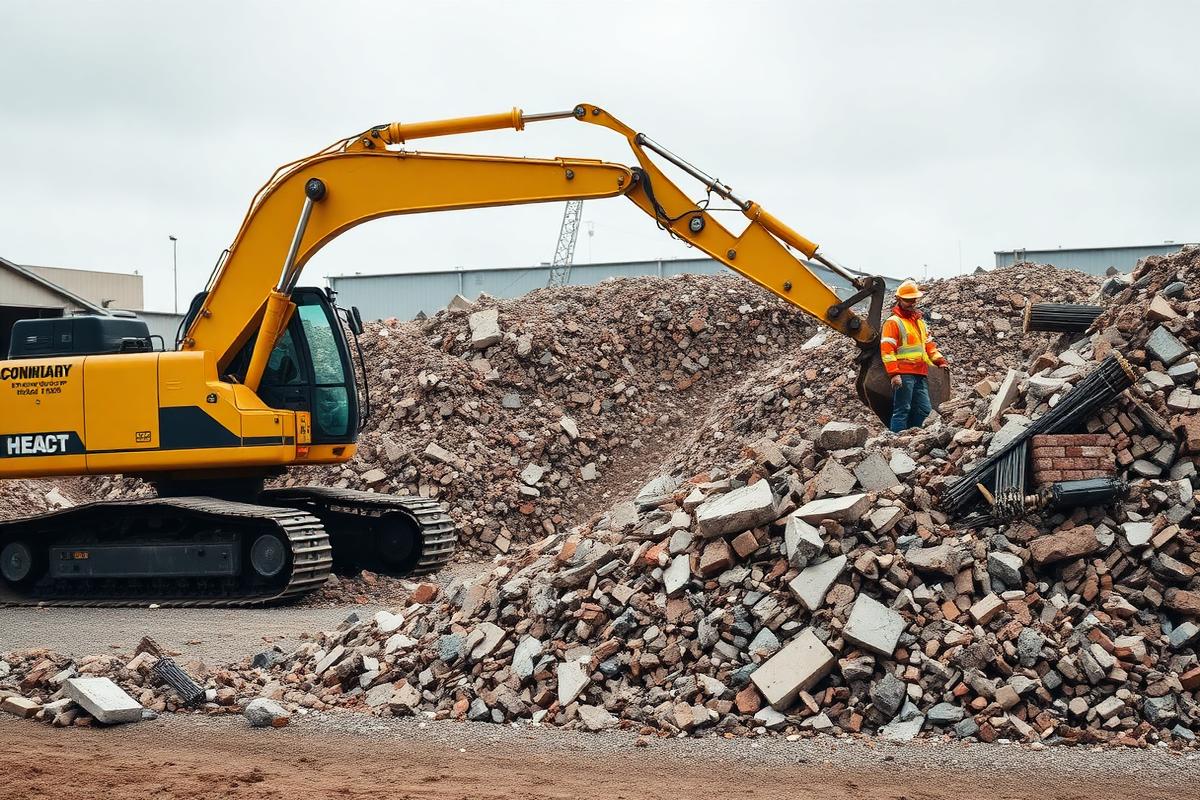
| CONCRETE / BRICK (mineral) | Concrete, brick, tile, block, render | Gypsum board, soil, timber offcuts, bags | Clean mineral loads price as crusher feedstock; contamination above roughly 5% by volume converts the load back to sorting rates |
| METAL | Rebar offcuts, ducting, conduit, straps, fixtures | Cable coated in debris, gas cylinders | Priced as scrap credit against your account — the bin that pays rent |
| TIMBER | Formwork, pallets, crates, offcuts | Laminates in fuel loads (declare them), heavily painted marine ply | Reduced-rate collection; clean consistent streams can offset cost entirely |
Everything else — packaging, plastics, general debris — goes to the mixed bin, which now shrinks. Placement rules: mineral bin nearest the structure works, metal bin lockable or sighted (scrap walks), signage in BM and English at throwing height, and one photograph of each bin in the weekly site report. The "wall" is the toolbox talk: five minutes, once, per new crew, repeated when the photos say so.
3. The mistakes that erase the gains
- The Friday collapse. Segregation discipline dies at week's end when bins are full and the pour is behind. Fix: swap thresholds — call for collection at 80%, never 100%.
- Gypsum in the mineral bin. Plasterboard is the most expensive innocent-looking mistake on this list: it contaminates crusher feedstock and reclassifies the load. Fix: name it on the signage specifically.
- Soil as "concrete". Excavation spoil is not mineral debris; a half-soil load prices as neither. Fix: spoil has its own route — agree it at project start.
- The subcontractor exemption. M&E and fit-out subcons treat main-contractor bins as free disposal. Fix: bin discipline written into subcontract conditions, enforced by the same photos.
- Hazardous fractions in any bin. Oils, solvents, contaminated containers and similar hazardous wastes belong to a separately licensed regime — Mahawijaya does not collect them — and one drum of oil in a timber bin converts recovery into a problem. Identify these streams at project start and engage a DOE-licensed contractor for them; consult the Department of Environment where classification is unclear (Department of Environment, 2005).
⚠ Warning: a segregation regime that is 90% observed captures most of the value. A mineral bin that is 90% clean captures none of it. Purity beats participation — police the concrete bin first.
4. The reporting dividend
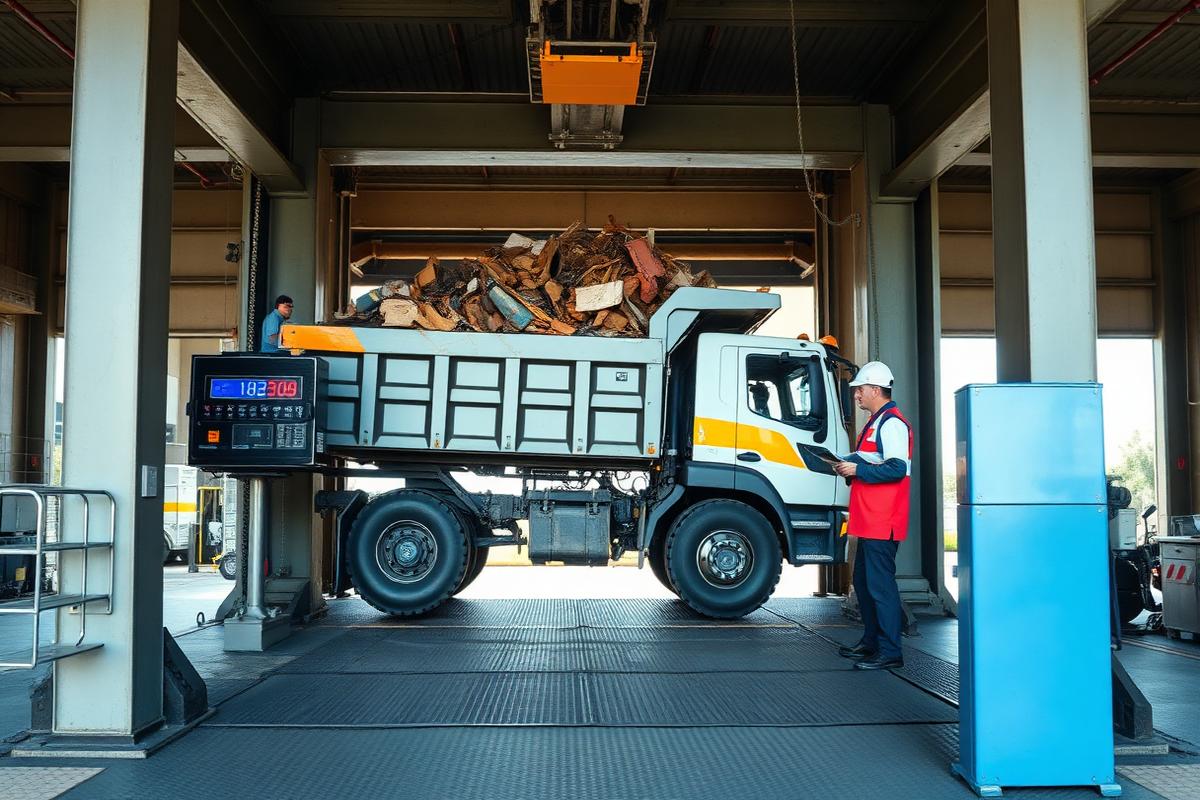
Segregation produces a second return that mixed disposal never can: per-stream data. Each separated stream generates its own weighbridge tickets, which means tonnage by material, recovery outcome by material and a diversion percentage that traces to primary records — exactly the structure that GRI 306 disclosures ask reporters to produce (waste generated, diverted and directed to disposal, by composition) and that green-building credit calculators consume (GRI, 2020). A site that segregates is, without additional effort, a site that can evidence its waste claims. On projects pursuing certification or feeding corporate ESG reports, that data is worth as much as the disposal saving — and under lawful-disposal obligations that follow the waste generator, the ticket trail is protection as well as proof (Laws of Malaysia, 2007).
5. Getting started this month
- Photograph your current bins and request a segregated-collection quotation against them — the delta funds the setup.
- Start with metal only if three bins feels heavy; the credit line makes the case internally within one statement cycle.
- Add the mineral bin at structure phase, the timber bin at formwork strike — match streams to programme phases.
- Put the weekly bin photo in the site report template; what gets photographed gets policed.
- Ask your recovery partner for per-stream tonnage in the monthly statement — if they cannot provide it, that is information too.
Frequently asked questions
Is segregation worth it on a small renovation? The metal split almost always is; the full three-bin setup pays from roughly one bin per stream per month. Send photos and ask for both prices — the comparison is free.
Who supplies the extra bins? Your collection partner, priced within the rotation. Segregated rotations frequently cost less in total than mixed rotations of the same tonnage because the material is worth more.
Do separated streams need different paperwork? Same paperwork, better resolution: tickets per stream instead of per mixture. Your QS and your sustainability report both gain a column.
What about hazardous materials? They are never part of ordinary segregation. Identify them early and route them through a DOE-licensed scheduled-waste contractor — a separate chain from anything discussed here (Department of Environment, 2005).
References
Department of Environment (2005) Environmental Quality (Scheduled Wastes) Regulations 2005 [P.U.(A) 294/2005]. Putrajaya: Department of Environment Malaysia. GRI (2020) GRI 306: Waste 2020. Amsterdam: Global Sustainability Standards Board. Laws of Malaysia (2007) Solid Waste and Public Cleansing Management Act 2007 (Act 672). Kuala Lumpur: Percetakan Nasional Malaysia Berhad.
Related articles
What Construction Waste Disposal Actually Costs in the Klang Valley · Recycled Aggregate vs Quarry Crusher Run · Building a Waste Dataset That Stands Up to Assurance
Want the segregated price for your site? Send photographs of your current bins and receive both numbers — mixed and segregated — within one working hour. Collection and resource recovery across Selangor and Kuala Lumpur. [Request a Quotation] · [WhatsApp Bin Photos]
Disclaimer: This article provides general operational guidance and contains no fixed rates. Hazardous waste identification and management must follow the applicable regulations and appropriately licensed contractors; consult the Department of Environment where uncertain.