
Executive Summary
Waste figures are among the easiest sustainability metrics to publish and the hardest to defend. When an internal auditor or external assurance provider samples a reported diversion percentage, the question is never whether the number looks reasonable — it is whether a specific tonne in the report can be traced backwards through documentation to a specific, weighed, dated movement. Organisations reporting under GRI 306: Waste 2020 are asked to disclose waste generated, diverted from disposal and directed to disposal by composition and destination (GRI, 2020); Malaysian listed issuers face a phased transition toward ISSB-aligned disclosure under the National Sustainability Reporting Framework, which raises the evidential bar further as assurance expectations mature (Securities Commission Malaysia, 2024). Whether your driver is regulation, customer requirements or voluntary reporting, the engineering is identical: build the evidence chain at the point of operation, not at the point of reporting. This article sets out that chain, the weaknesses assurance most commonly finds, and the controls that close them.
1. Collection is not data management
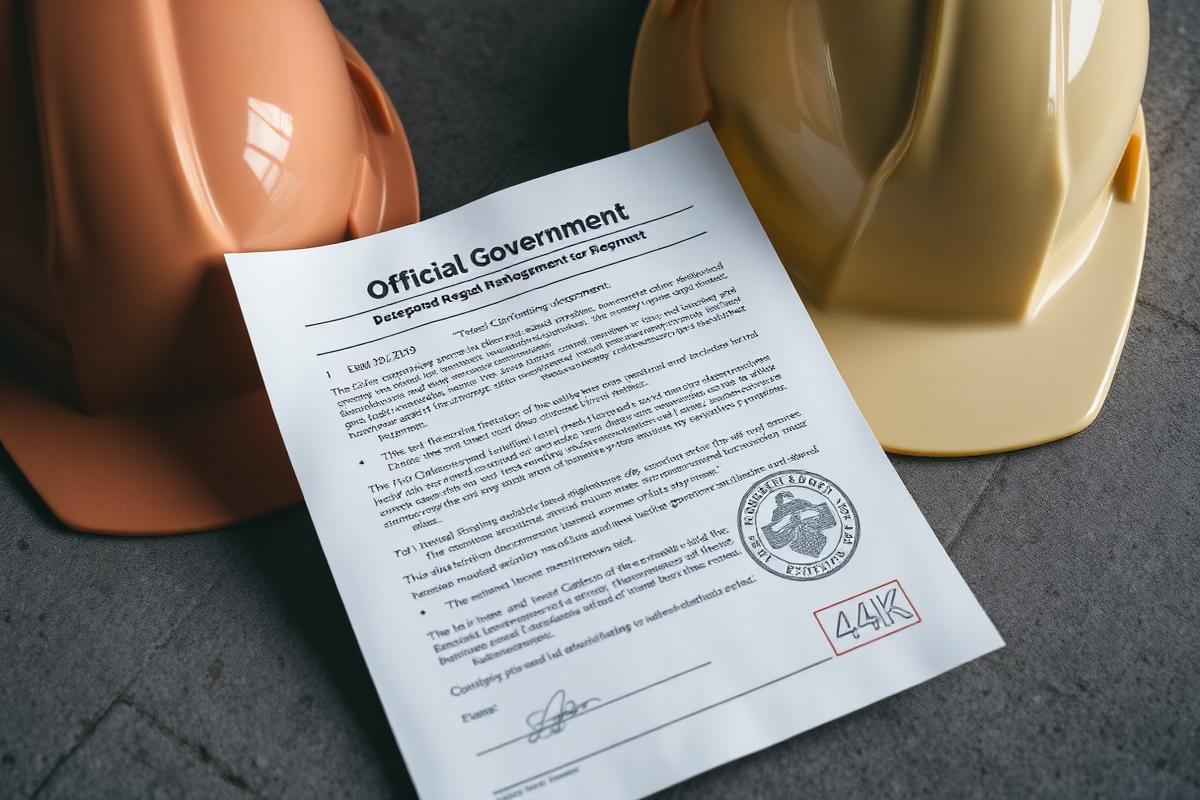
A waste vendor who removes material has done logistics. A waste dataset exists only if each movement left a record that answers five questions: what material, what quantity (measured, not estimated), when, moved by whom, and to what destination with what outcome (recovery or disposal). For most construction and industrial streams, no regulation writes this chain for you — customers, frameworks and assurance providers do. The organisations that fare well under sampling are the ones whose vendors generate measured records as a by-product of normal operations, so the reporting team assembles evidence rather than reconstructing it. (Where a business also generates regulated hazardous streams, those carry statutory record-keeping duties of their own under the scheduled waste regime, handled by the separately licensed contractors engaged for them (Department of Environment, 2005).)
2. The evidence chain
| Step | Record | Purpose | Typical owner |
|---|---|---|---|
| 1 | Collection record | Establishes what left site, when, and with whom | Site team + collector |
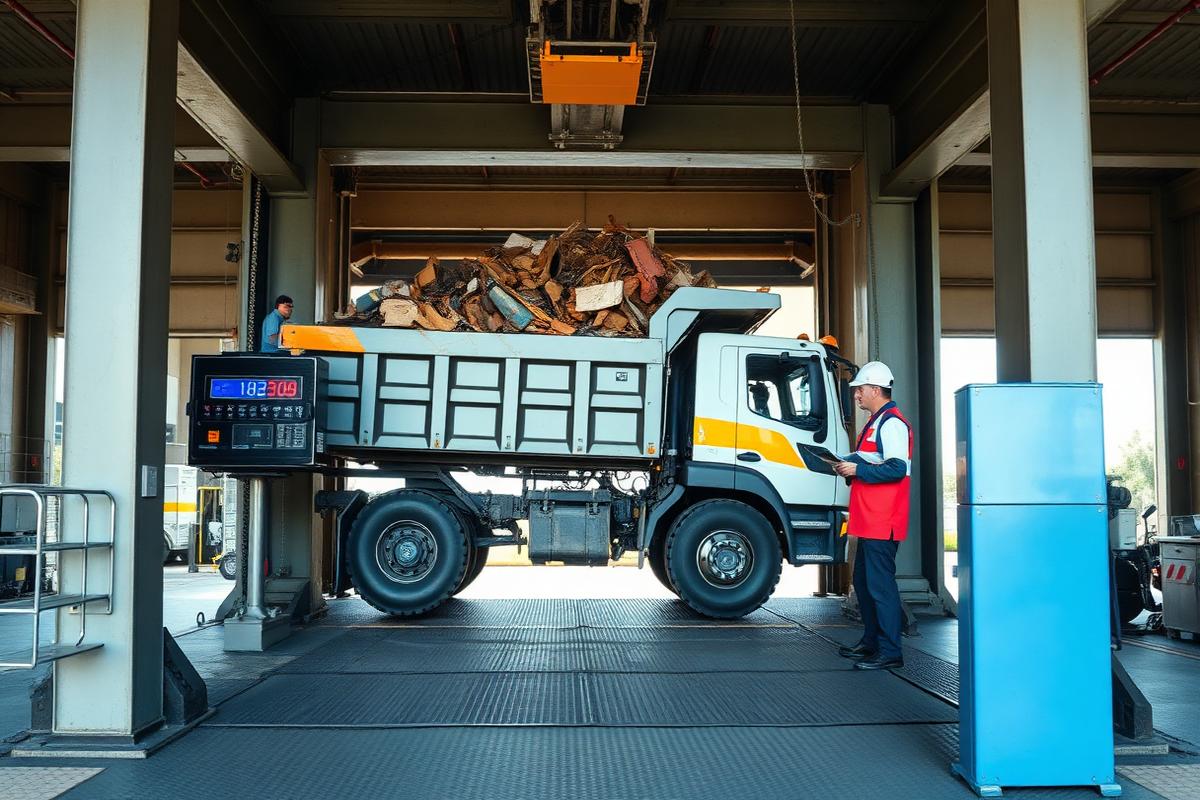
| 2 | Weighbridge ticket | Converts the movement into a measured quantity | Receiving facility |
| 3 | Photographic record (load, bin, contamination) | Supports classification and dispute resolution | Site team |
| 4 | Material classification record | Assigns the load to a reporting category | Generator |
| 5 | Recovery/processing record | Evidences the diverted-from-disposal claim | Processor |
| 6 | Final destination record | Closes the chain: recovery outcome or lawful disposal | Processor / disposer |
| 7 | Periodic reconciliation | Ties tickets to invoices to reports; catches gaps monthly, not annually | Sustainability/finance |
Key takeaway: the diversion percentage is computed at step 7, but it is created at steps 1–6. No reporting-period effort can retrofit evidence that operations never generated.
3. What assurance sampling actually does
Assurance providers do not re-audit every tonne. They select samples — a month, a site, a waste stream — and walk each sampled figure back through the chain. One sampled tonne that dead-ends (a ticket that cannot be found, a transfer with no destination record, a "recycled" claim resting on a vendor's verbal assurance) does not discredit one tonne; it discredits the control environment, and with it the dataset. This is why missing documents are disproportionately expensive: sampling converts small gaps into large findings.
Common weaknesses found in practice:
| Issue | Risk | Recommended control |
|---|---|---|
| Estimated quantities ("about 3 lorries") | Unverifiable metric | Weighbridge measurement contractually required per load |
| Vendor-supplied summaries without primary tickets | Chain rests on assertion | Primary tickets delivered per load; summaries reconciled to them |
| No final-destination evidence for "recycled" streams | Diversion claim unsupported | Processor statements naming outcome, traceable to intake tickets |
| Spreadsheet as system of record, edited freely | No version integrity | Controlled register with change log; monthly lock |
| Records held only by the vendor | Retention risk at contract end | Contractual data delivery; generator retains own archive |
| Mixed units and categories across sites | Non-comparable data | One classification scheme and unit standard, written down |
4. Metrics worth building
| Metric | Why it matters | Typical data source |
|---|---|---|
| Waste generated by stream (tonnes) | Baseline for everything (GRI 306-3) | Weighbridge tickets |
| Diverted from disposal (tonnes, %) | The circularity headline (GRI 306-4) | Recovery records reconciled to tickets |
| Directed to disposal (tonnes) | The honest remainder (GRI 306-5) | Disposal records |
| Recovery by outcome (recycling, energy, reuse) | Quality of diversion, not just quantity | Processor statements |
| Cost and credit per tonne | Connects ESG to finance; funds the programme | Invoices reconciled to tickets |
A diversion claim published without its disposal remainder is a marketing number; assurance will ask for both sides of the balance.
5. Controls that make the dataset defensible
- Contract for evidence, not just removal — tickets per load, monthly primary-document delivery, destination statements, retention terms.
- One classification scheme across sites and vendors, mapped to your reporting framework's categories (GRI, 2020).
- Monthly reconciliation of tickets ↔ invoices ↔ register — gaps found at month three are corrections; at year-end they are findings.
- Retention schedule — align with the strictest applicable requirement among regulation, framework and contract.
- Access and version control — a locked register with named editors beats a shared spreadsheet every time.
- Digital capture where it pays — weighbridge integration, GPS-logged movements and photographed loads reduce transcription risk; technology serves the chain, it does not replace it.
Internal audit note: test your own chain before anyone else does. Pick five reported tonnes at random and walk them backwards. The exercise takes an afternoon and predicts your assurance outcome with uncomfortable accuracy.
Management checklist
☐ Every load weighed and ticketed ☐ Classification scheme documented ☐ Primary documents in your archive, not only the vendor's ☐ Recovery outcomes evidenced to final destination ☐ Monthly reconciliation performed and signed ☐ Retention schedule applied ☐ Register access-controlled and versioned ☐ Annual self-sampling walk-back completed
Frequently asked questions
Do we need external assurance? Not universally. Obligations vary with listing status, customer requirements and chosen frameworks; the National Sustainability Reporting Framework phases requirements for Malaysian listed issuers (Securities Commission Malaysia, 2024). Build the chain regardless — every driver eventually asks the same questions.
Our vendor "handles the reporting". Is that enough? Only if primary evidence reaches your archive. A dataset you cannot produce independently is a dataset you do not own.
How far back must records go? Follow the strictest applicable rule among regulation, framework and contract — and write the schedule down.
References
Department of Environment (2005) Environmental Quality (Scheduled Wastes) Regulations 2005 [P.U.(A) 294/2005]. Putrajaya: Department of Environment Malaysia. GRI (2020) GRI 306: Waste 2020. Amsterdam: Global Sustainability Standards Board. IFRS Foundation (2023) IFRS S1 General Requirements for Disclosure of Sustainability-related Financial Information; IFRS S2 Climate-related Disclosures. London: IFRS Foundation. Securities Commission Malaysia (2024) National Sustainability Reporting Framework. Kuala Lumpur: Securities Commission Malaysia.
Related articles
Who Is Legally Responsible for Construction Waste? · Segregation at Source: The Cheapest Money on a Construction Site · What Construction Waste Disposal Actually Costs in the Klang Valley
Building your waste evidence chain? Mahawijaya's collections generate the primary records this article describes — weighbridge tickets per load and monthly reconciled reporting across Selangor and Kuala Lumpur. [Request a Sample Report Pack] · [Speak With Our Team]
Disclaimer: This article provides general information on data management practices and is not legal, accounting or assurance advice. Reporting and assurance obligations depend on your organisation's specific circumstances and applicable frameworks.